Monday, April 25, 2011

From Hydrogen to Tellurium - CHLORINE


Chlorine


The seventeenth element is Chlorine. It has 17 electrons, 2 in the inner shell, 8 in the 2nd and 7 in the third, thus leaving one space in the outer shell to completely fill it. Elements with one space in their outer shells are grouped in the Halogen family. This is the second halogen we have met, Fluorine being the first.


Chlorine is a green coloured gas which was first isolated in the 1770s. The gas is poisonous. It also has a bleaching effect, taking the colour out of things it comes in contact with. The gas is not found in nature as Chlorine is very reactive and combines with other elements to give compounds. 


Most people are familiar with the smell of Chlorine - it is used in very small quantities in our drinking water and also in swimming pools to kill bacteria.


One of the compounds, Sodium Chloride, is used regularly in our kitchens - we refer to it as salt. It seems hard to believe that if the gaseous molecules of Chlorine combine with the metal atoms of sodium that a white crystalline solid which we know as salt results.

Sunday, April 17, 2011

From Hydrogen to Tellurium - SULPHUR

Sulphur


The sixteenth element, Sulphur is given the symbol S. This element is found in its elemental form, often near volcanos and springs. It is a yellow crystalline solid, composed of rings of 8 Sulphur atoms.


It has been known about since ancient times and is the material referred to as "brimstone" in the bible. 


Sulphur is a non-metal which sits under oxygen in the periodic table. Like oxygen if forms compounds with 2 other atoms -chemists say it is divalent. An example of a divalent compound of Sulphur is Hydrogen Sulphide - H2S. Hydrogen Sulphide is a colourless, poisonous gas that smells like rotten eggs. 


It can also form molecules with different number of bonds. An example is Sulphur Dioxide, SO2 where it is joined by double bonds to both oxygens. Sulphur dioxide is sometimes used to preserve fruit for jam making.


Sulphur dioxide is produced when coal is burned. This SO2 reacts with water H2O in the atmosphere to form Sulphuric Acid H2SO4. This then falls as acid rain and affects crop growth and damages buildings.


In fact Sulphur forms compounds with all elements except the noble gases.


If you heat Sulphur with iron you get a new compound - iron sulphide. This experiment is often used to show the difference between a chemical mixture and a reaction producing a new material. Before heating this mixture the iron could be separated from the Sulphur using a magnet. Once it has been heated and reacted the new compound is not magnetic, nor can the magnet separate the iron from the Sulphur.


Many Sulphur containing compounds are smelly. You might be familiar with the sulphury smell from car's catalytic converters. Garlic and the Skunk also owe their smell to Sulphur containing compounds. 


Experiment of the week
To examine the effect of Acid Rain on crops


You will need:
4 clear plastic tubs with lids (3kg Margarine containers are ideal.)
Kitchen roll
Pea seeds
Water
Vinegar
spoon


What to do:
Soak the peas overnight in water
In each of the 4 tubs cover the bottom with a few layers of kitchen roll. Dampen the kitchen roll well with water
Sprinkle pea seeds on the damp kitchen roll.
Label the containers 1,2 3 and 4
Put the lid onto container 1 and leave in a warm place
To container 2 add 1 spoon of vinegar. Put on the lid and leave alongside container 1.
To container 3 add 2 spoons of vinegar. Put on the lid and leave alongside container 1.
To container 4 add 3 spoons of vinegar. Put on the lid and leave alongside container 1.


Examine each day for the next 2 weeks and record your results.


Which set of peas will grow best?


Monday, April 11, 2011

From Hydrogen to Tellurium - PHOSPHORUS

Phosphorus 


At number 15 and with the chemical symbol P, we find Phosphorus. In the periodic table Phosphorus sits below Nitrogen. Like Nitrogen, Phosphorus has 3 electrons in its outer shell and therefore reacts similarly to nitrogen.
It is a non-metal and like many other elements it is not found as an element in nature.
Elemental Phosphorus forms many different crystal structures and each structure has its own colour. White, Red and Violet Phosphorus are 3 such forms. We found previously that carbon exists in a number of different forms and that the different carbon allotropes look and feel very different. This is also the case for Phosphorus.
Different allotropes of Phosphorus


Phosphorus was discovered by a German alchemist when he was trying to turn urine into gold. Instead of gold he ended up with a white material which glowed in the dark and when lit, burned very brightly. 


Because Phosphorus can glow in the dark it is often used on the faces of watches so you can tell the time in the dark. 


Because it can burn so well, it is used on the rough part of match boxes that is used to strike matches on.
Phosphorus is essential for both animal and plant life. DNA contains Phosphorus as do many plant fertilisers. It is also found in washing powder

Monday, April 4, 2011

From Hydrogen to Tellurium - SILICON


Silicon


At number 14 is the unusual element Silicon with the chemical symbol Si. Why do I say it is any more unusual than the others? Well with its 4 outer shell electrons, it sits in the periodic table just under Carbon. We already learned that carbon is a non-metal. We have also learned that the elements with the same number of outer shell electrons behave similarly. When it comes to Silicon however this is not quite true. Silicon has some properties of a metal and some of a non-metal posing problems for scientists as to which group it should be in. In the end they decided it should go into a group called metaloids - a material with some metal and some non-metal characteristics. We also found out a few weeks ago that Boron has this same part metal, part non-metal behaviour.


This nearly metal behaviour is what makes Silicon interesting and very important to our lives today. It is known as a semiconductor because it doesn't conduct electricity as well as a metal but it is better at conducting than a non-metal. Semiconductors are widely used in the electronics and computer industries.


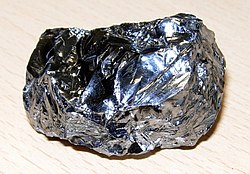
So what is it like? Well, Silicon is grey with a metallic appearance. It is very plentiful in the universe, but is hardly ever found as elemental Silicon. Instead it is found combined with oxygen as silica, SiO2. Sand is made of silica and this sand is in turn used to make glass. Small bags of Silica are also often found packed with shoes or in new handbags. The job of these little packets is to absord water so the leather products don't get damp.


Pure crystalline Silicon dioxide resonates at a certain frequency and because of this property it is used in watches.


Silicon combines with carbon oxygen and hydrogen to make a series of polymers known as silicones. You might have come across such rubbery polymers  - the wristbands which were very popular a few years ago were made from silicone..

Tuesday, March 29, 2011

From Hydrogen to Tellurium - ALUMINIUM

Aluminium


In the 13th spot we have an element that is familiar to most of us - Aluminium, with its chemical symbol Al. And you have guessed it, Aluminium has 13 electrons - 2 in the inner shell, 8 in the middle one and 3 in the outer. To fill the outer shell you know by now that it needs another 5 electrons but Aluminium normally forms compounds with 3 bonds, just pairing up its outer electrons.


So what does it look like? Well Aluminium is a silvery white metal. It is light and non-magnetic. It is very plentiful in the earth's crust but is not needed by either plants or animals for life. As far as we know it is not bad for you or poisonous but there are some people who think it might not be good for you. There is more research going on to find out more about this.


Although it is plentiful in the earth's crust it isn't found as lumps of Aluminium metal but as part of various minerals. Scientists extract the Aluminium from there minerals to get the material we know so well. 


We use it for lots of things. One of the important uses children know about is in drink cans. Have you noticed that they are made from a different material than baked bean tins? It is also used in window frames, in cars, engines and in some countries they use it for their coins.


There have been times in history when Aluminium was considered to be very valuable, more valuable even than gold, and in those days it was used to make jewellery.


It costs a lot of money and uses a lot of energy to extract Aluminium from the earth so these days we recycle our Aluminium. For every €100 it would cost to extract Aluminium from the earth we can recycle the same amount for €5 so it is a very good idea to do this - saving money and energy.


Experiment of the week: The Magic Tilting Can

You will need:
One empty 330ml drink can
Water

What to do:
Tilt the can over and see if it will balance on the rim at the bottom edge. You should find that it tips over and won't balance.
Pour about 100 mls of water into the can and try again carefully tilting the can right onto the rim. 
It balances!

How does this happen? Post your explanations and photos below.

Monday, March 21, 2011

Chemistry from Hydrogen to Tellurium - MAGNESIUM

Magnesium

At number 12 we have Magnesium with the chemical symbol Mg. Magnesium is a silvery white metal.
       Crystals of elemental magnesium.
Magnesium is very plentiful in the universe and on earth, however like many of the other elements we have discussed, it is never found as an element on its own.

As we all know the sea is salty. This saltiness comes from various salts including Sodium Chloride the salt we are all familiar with and Magnesium Chloride which is a salt of Magnesium.


To be healthy, our bodies need Magnesium. Our bones and teeth contain Magnesium and we also need it to help digest or get energy from our foods.
The following foods are some of the sources of Magnesium - Cereals, soybean, green leafy vegetables, almonds, seeds, nuts, apples, lemon, grapefruit, seafoods, meat, milk and dairy products.


Magnesium has 12 electrons, 2 in the inner shell, 8 in the next shell and 2 in the outer shell. Again the outer shell has room for 8 so Magnesium is happy to give away these 2 "extra" electrons and form compounds with elements whose outer shells need one or two electrons to be full. You might remember way back near the start of the year we met another element with 2 electrons in its outer shell? Remember Beryllium?. It also has 2. Scientists discovered that beryllium and Magnesium behave similarly so they grouped them into a family called the Alkali Earth Metals.  


Perhaps you can also remember the names of some elements whose outer shells need one or two more electrons to be full? These elements react and form compounds with the Alkali Earth Metals.

Remember oxygen? It needs 2 electrons so one oxygen combines comfortably with one Magnesium to give magnesium oxide, MgO. The reaction in which Magnesium and oxygen combine is interesting. To combine them you need to get a long thin piece of magnesium and light it. It will burn with a very bright white flame which is so bright you could damage your eyes if you look directly at it. If you were to try to use a large sheet or lump of Magnesium you would find it impossible to get it to light, even using a blow torch. Scientists have discovered that this is because Magnesium is a very good conductor of heat. No sooner than you have you heated up one corner, it has cooled itself down by passing the heat to other parts of the piece of metal. There are very interesting video clips of this. Check this one out http://boingboing.net/2010/01/23/saturday-morning-sci-13.html
We saw last week how sodium combines with 1 chlorine atom to make sodium chloride. Magnesium also forms a chloride but it needs 2 chlorine atoms as each one only has room for 1 of the two electrons magnesium has to give away.

There is a story about a farmer who was giving his cattle a drink of water. No matter what he did they refused to drink. He found however that when he washed their cuts and grazes with the same water they healed very quickly. Further investigation showed that the water had dissolved in it a Magnesium compound - magnesium sulphate MgSO4. This chemical is known as Epsom Salts and is still used by farmers on animals skins and by people in their baths to make their skin feel soft. Epsom salt makes nice needle shaped crystals and this week's experiment describes how to grow them.


Experiment


You will need:
epsom salts, water, beaker, warm water, shallow tray, spoon, ruler, adult supervision.

What to do:
Before you start examine the Epsom salt crystals carefully. Measure them, note their shape. You might even stick a few into your copy.
Place 1 or 2 spoons of Epsom salts into a beaker. Add warm water, one spoon at a time. Stir well after each spoon of water is added. Continue until all the Epsom salt has dissolved. If you did the experiment last week you should notice that you need much less water to dissolve the Epsom Aalto than you did to dissolve the sodium chloride.
Pour the solution into the shallow tray and leave in a warm dry place. After a day or 2 your crystals should begin to grow. What shape are they? How long? You should have long needle crystals varying in length from 1 to 10 cms.